Guides
Bar Tools: The Complete Home Bar Essentials Guide
Every bar tool you need for a home bar: shakers, jiggers, strainers, spoons and more. What each does, what to buy first, kitchen swaps, glassware and ice.
By the Cocktail Flip team · · 7 min read
Quick answer
Start a home bar with four essentials: a shaker, a jigger, a strainer and a bar spoon. Add a mixing glass, a muddler, a citrus press and a peeler, plus good ice, and you can make almost every classic cocktail.
In this article
- What to buy first: the four essentials
- Cocktail shakers: Boston, cobbler or Parisian
- Jiggers: why measuring matters
- Strainers: Hawthorne, julep and fine mesh
- Bar spoon and mixing glass
- Muddler, citrus press and peeler
- Nice-to-have extras
- Kitchen swaps while you build your kit
- Glassware: the five glasses that cover everything
- Ice: the ingredient people forget
- Caring for your bar tools
- Put your new bar to work
You don't need a professional back bar to make excellent cocktails at home. You need a handful of well-chosen bar tools, a few glasses and decent ice. This guide walks through every common tool: what it does, whether you really need it, and what you can borrow from your kitchen while you decide.
If you're just starting, read the "what to buy first" section and stop there. Everything after it is a nice-to-have. Once your kit is ready, put it to work with our Old Fashioned recipe or classic Margarita.
What to buy first: the four essentials
Almost every classic cocktail is either shaken or stirred, measured and strained. Four tools cover all of it:
- 1A cocktail shaker, for drinks with citrus, cream or egg white.
- 2A jigger, for measuring. This is the tool that makes your drinks consistent.
- 3A strainer, to hold back ice and fruit as you pour.
- 4A long bar spoon, for stirring spirit-forward drinks like the Old Fashioned or Manhattan.
Cocktail shakers: Boston, cobbler or Parisian
There are three main styles of shaker, and each makes good drinks. The difference is mostly in how they feel to use.
The Boston shaker is two pieces: a large metal tin and a smaller tin or a mixing glass that fits inside it. It's the bartender's favourite because it's fast, holds a lot of ice, and is easy to clean. It takes a little practice to seal and separate, and you need a separate strainer.
The cobbler shaker is the three-piece design most people picture: a tin, a lid with a built-in strainer, and a small cap. It's the easiest for beginners because everything is included. The downside is that the lid can stick when it gets cold, and the built-in strainer is slow.
The Parisian (or French) shaker is two pieces like a Boston but both are metal and shaped to fit together neatly. It looks beautiful and seals well, but it also needs a separate strainer.
Our advice: if you want one tool that just works, buy a cobbler. If you plan to make cocktails often, a pair of weighted metal Boston tins will last for years.
Get 200 cocktails with a game on each
Complete Digital Edition · $24.99 · See what's inside →
Jiggers: why measuring matters
A jigger is a small double-ended measuring cup. The most common sizes are 1 oz (30 ml) and 2 oz (about 30 ml and 60 ml), or 25 ml and 50 ml in the UK and Europe. Many jiggers have marked lines inside for ½ oz (15 ml), ¾ oz (22.5 ml) and 1½ oz (45 ml).
Cocktails are about balance, and a few millilitres of lime or syrup can make a drink too sour or too sweet. Free-pouring looks fun, but measuring is how you make the same great drink twice. Choose a tall, narrow jigger with clear inside markings; they're more accurate than wide, shallow ones.
No jigger yet? A set of measuring spoons and a shot glass will do. One tablespoon is about ½ oz (15 ml).
Strainers: Hawthorne, julep and fine mesh
The Hawthorne strainer is a flat paddle with a coiled spring around its edge. It fits over the top of a shaker tin and holds back ice as you pour. If you only buy one strainer, buy this one.
The julep strainer is a perforated, spoon-shaped strainer used with a mixing glass for stirred drinks. It's elegant, but a Hawthorne works over a mixing glass too.
A fine-mesh strainer is a small tea-strainer-style sieve. Hold it under your Hawthorne as you pour (this is called double straining) to catch ice chips and bits of fruit or herbs. It gives shaken drinks a smoother, silkier texture.
Bar spoon and mixing glass
A bar spoon has a long, often twisted handle and a small bowl. The length lets you reach the bottom of a mixing glass, and the twist helps it spin smoothly between your fingers as you stir. The bowl usually holds about a teaspoon, which is handy for small measures of syrup.
A mixing glass is a heavy, wide glass with a spout, used for stirred drinks. It's lovely to have, but the large tin of a Boston shaker or even a sturdy pint glass does the same job.
Why stir instead of shake? Drinks made only of spirits, vermouths and bitters taste best clear and silky. Shaking adds tiny air bubbles and ice chips, which cloud them. We explain this in more detail in our mixology basics guide.
Muddler, citrus press and peeler
A muddler is a short, thick stick for pressing fruit, herbs and sugar to release their flavour, as in a Mojito or a sugar-cube Old Fashioned. Choose one with a flat, untreated end. Press gently; bruising mint too hard makes it bitter.
A handheld citrus press is the biggest flavour upgrade in this whole list. Fresh lime and lemon juice make a dramatic difference, and a press gets more juice out with less effort than squeezing by hand.
A sharp Y-shaped vegetable peeler makes neat strips of citrus peel for garnishes. Twisting the peel over the glass sprays a fine mist of aromatic oils on top of the drink.
Nice-to-have extras
- 1A channel knife or zester, for long, thin spirals of peel.
- 2A small cutting board and paring knife, kept just for bar fruit.
- 3Speed pourers, if you batch drinks for parties.
- 4An ice mould for large cubes or spheres, which melt slowly in stirred drinks.
- 5A Lewis bag and mallet, for crushing ice for juleps and tiki drinks (a clean tea towel and a rolling pin work too).
- 6Bottle stoppers for vermouth, which should be kept in the fridge once opened.
Kitchen swaps while you build your kit
Don't let missing tools stop you. Most of the work can be done with things already in your kitchen:
- 1Shaker: a large jam jar or protein shaker with a tight lid.
- 2Strainer: the lid of the jar held slightly open, or a small sieve.
- 3Jigger: measuring spoons or a shot glass (1 tbsp ≈ ½ oz (15 ml) ≈ 15 ml).
- 4Bar spoon: any long teaspoon or a chopstick.
- 5Muddler: the end of a rolling pin or a wooden spoon handle.
- 6Mixing glass: a pint glass or a large measuring jug.
Glassware: the five glasses that cover everything
You can serve any drink in any glass, but the right shape helps with temperature, aroma and presentation.
- 1Rocks glass (old fashioned glass): short and sturdy, for drinks over ice like the Old Fashioned, Negroni or Margarita.
- 2Highball glass: tall and narrow, for long drinks topped with soda, like a Gin & Tonic or Paloma.
- 3Coupe: a stemmed, shallow bowl for shaken or stirred drinks served without ice, like a Daiquiri.
- 4Martini glass: the classic V shape. A coupe is easier to carry without spilling.
- 5Wine glass: surprisingly versatile for spritzes and anything with lots of ice.
Ice: the ingredient people forget
Ice chills the drink and adds water, and water is part of the recipe. Small, wet, cloudy ice from an old freezer tray melts quickly and can taste of whatever else lives in your freezer.
For shaking, use plenty of fresh, dry cubes; more ice actually means less dilution, because the drink chills faster. For stirred drinks served on the rocks, one large cube looks great and melts slowly. Keep a bag of ice just for drinks and replace it regularly.
Caring for your bar tools
Rinse tools straight after use so citrus and sugar don't dry on them. Stainless steel is easy to look after, but dry it promptly to avoid water spots. Wooden muddlers should be hand-washed and left to dry fully. A quick rinse of the shaker between drinks keeps flavours from mixing.
Put your new bar to work
Tools are only half of a great night in. Pick a recipe, make two, and turn it into an evening. Our easy cocktails for two are a good place to start, and the free AI Mixologist suggests drinks from whatever bottles you already have.
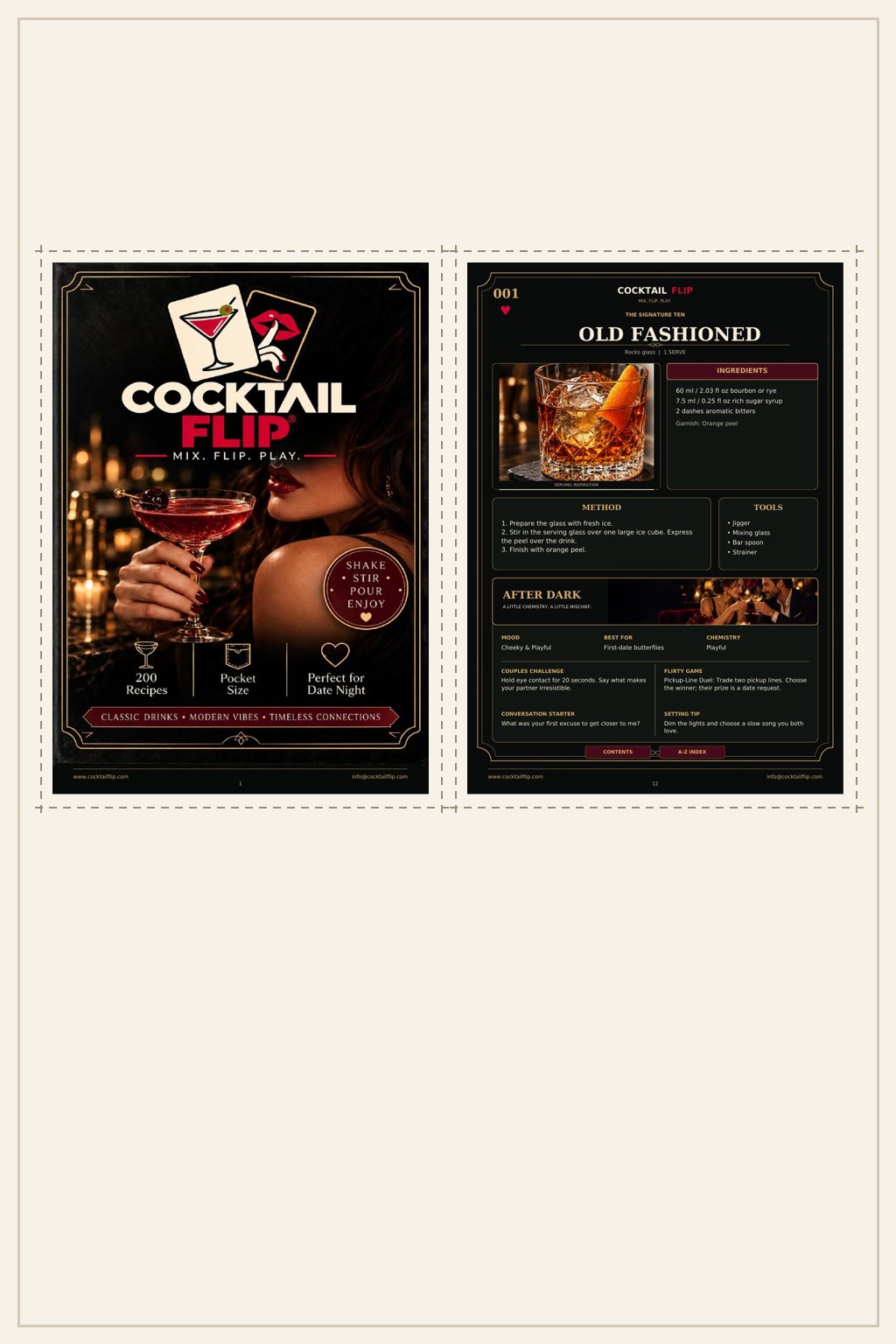
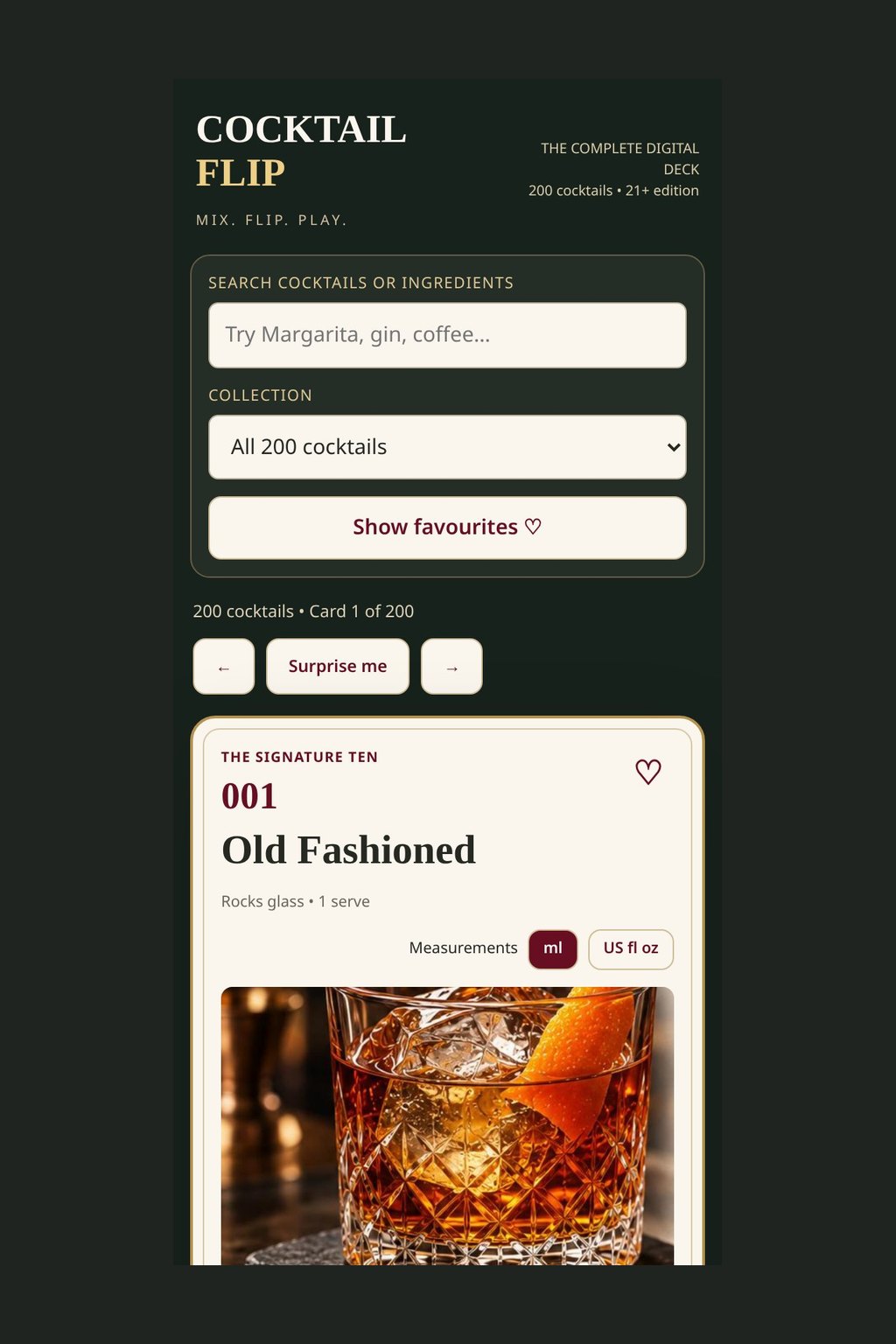
The Cocktail Flip Complete Digital Edition has 200 cocktail recipes, each with a game to play while you drink it, in an interactive web deck, a print-at-home deck and a 213-page guidebook. Please drink responsibly: 21+ in the US, 18+ in the UK and Australia, 18 or 19+ in Canada depending on the province, or the legal drinking age where you live. Never drink and drive, and alcohol-free versions are always welcome at the table.
Frequently asked questions
What bar tools do I need for a home bar?
Start with four: a cocktail shaker, a jigger, a strainer and a bar spoon. Add a citrus press next, then a muddler and a fine-mesh strainer as you try more recipes.
Is a Boston or cobbler shaker better for beginners?
A cobbler shaker is easier for beginners because it has a built-in strainer. A Boston shaker is faster and easier to clean once you get used to it, but needs a separate strainer.
Can I make cocktails without a shaker?
Yes. A large jar with a tight lid works well for shaken drinks, and stirred drinks only need a glass and a long spoon.
What size jigger should I buy?
A 1 oz (30 ml) / 2 oz (60 ml) jigger (about 30 ml / 60 ml) with inside markings for ½ oz (15 ml) and ¾ oz (22.5 ml) covers most recipes. In the UK and Europe, a 25 ml / 50 ml jigger is common.
What glasses do I need for cocktails?
A rocks glass, a highball and a coupe will cover almost every cocktail. Add wine glasses for spritzes.
Not ready to buy?
Get a free sample card by email
A real recipe and game to try tonight. Free, no payment.
200 cocktails. A game on every one.
The Cocktail Flip digital edition: an interactive web deck, a print-at-home deck and a 213-page guidebook.
For adults 21+ in the US (or the legal drinking age where you live). Cards only — no alcohol is sold or shipped. Drink responsibly, never drink and drive. The games can be enjoyed without alcohol.