Guides
Cocktail History: Where Our Favourite Drinks Came From
A short history of the cocktail, from early American definitions and 1800s bartender guides to Prohibition, the tiki era and today's classic cocktail revival.
By the Cocktail Flip team · · 5 min read
Quick answer
The cocktail was first defined in print in 1806 as spirits, sugar, water and bitters. It grew through the 19th-century bartending boom, survived Prohibition and returned with the modern craft cocktail revival.
In this article
- Before the cocktail: punches, slings and toddies
- The first definition of a cocktail
- The 1800s: bartending becomes a craft
- Prohibition and the cocktail abroad
- Mid-century: tiki, highballs and the Martini
- The dark ages of mixology
- The modern cocktail revival
- Classic cocktail families at a glance
- Why the stories matter at home
Every time you stir an Old Fashioned or shake a Margarita, you're taking part in a tradition more than two hundred years old. Cocktail history is full of colourful characters and competing legends, and many of the stories you hear in bars can't be proven. This guide sticks to the broad, well-documented outline and flags the legends as legends.
Before the cocktail: punches, slings and toddies
Long before anyone used the word "cocktail", people mixed spirits with sugar, water, spice and citrus. Punch, served from large bowls and shared among a group, was popular in Britain and its colonies in the 1600s and 1700s. Smaller, single-serve mixed drinks like slings, toddies and juleps were also common.
These drinks already contained the building blocks we still use today: something strong, something sweet, something sour or spiced, and water. The cocktail took that idea and added one more ingredient.
The first definition of a cocktail
One of the best-known early printed definitions appeared in an American newspaper, The Balance and Columbian Repository, in 1806. It described a cocktail as a stimulating drink made of spirits of any kind, sugar, water and bitters.
That simple formula is, almost exactly, what we now call an Old Fashioned. Bitters, originally sold as medicinal tonics, were the ingredient that set the cocktail apart from other mixed drinks of the time.
Where the word itself comes from is still debated. Several theories exist, involving horses, roosters and even French egg cups, but none has been proven. It's an honest mystery.
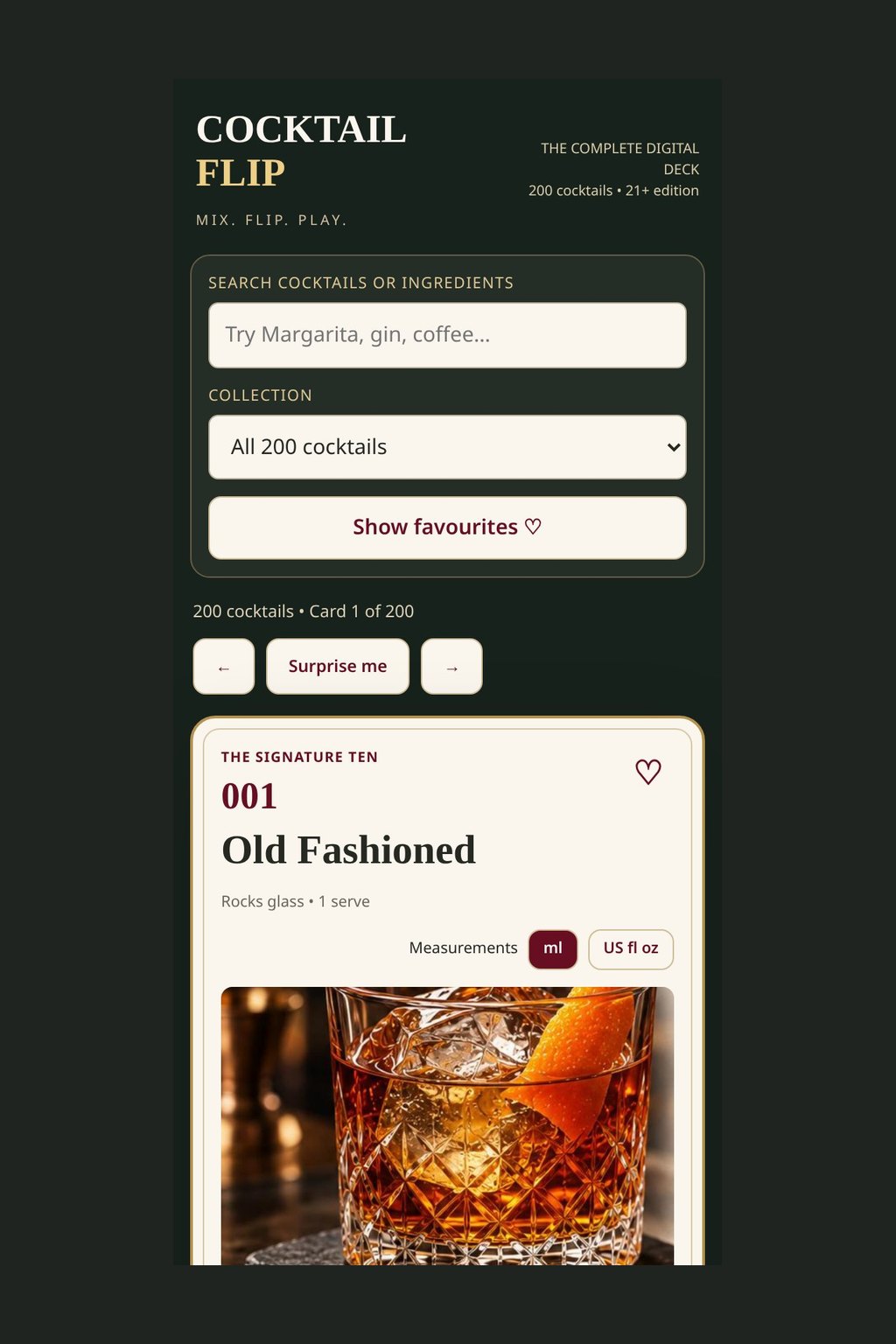
Get 200 cocktails with a game on each
Complete Digital Edition · $24.99 · See what's inside →
The 1800s: bartending becomes a craft
Through the 19th century, American bars grew more ambitious. Ice, once a luxury, became widely available thanks to the commercial ice trade, and it changed drinks completely: cold, diluted, crisp cocktails became possible.
In 1862, the bartender Jerry Thomas published one of the first widely known bartender's guides in the United States. Books like his recorded recipes and grouped drinks into families such as sours, fizzes, flips, cobblers and cocktails. Bartending started to look like a skilled trade with its own techniques and tools.
As the century went on, bartenders added new ingredients such as vermouth, liqueurs and fancy syrups. Drinks like the Manhattan and early versions of the Martini emerged. Drinkers who preferred the original, simpler recipe began asking for a whiskey cocktail done the "old-fashioned" way, which is the origin usually given for the Old Fashioned's name. Read more in our Old Fashioned recipe.
Prohibition and the cocktail abroad
From 1920 to 1933, national Prohibition banned the production and sale of alcohol in the United States. Drinking didn't stop; it moved underground into speakeasies, where poorly made spirits were often disguised with juices, syrups and other mixers.
Many skilled American bartenders left to work in Europe, Cuba and elsewhere, taking their craft with them. Bars in cities like London, Paris and Havana became famous for cocktails during this period, and the classic Daiquiri is closely associated with Cuba in these years.
Mid-century: tiki, highballs and the Martini
After Prohibition ended, American cocktail culture took new directions. Tiki bars, with their rum-heavy, tropical drinks and elaborate presentation, became a craze from the 1930s onwards. Simple highballs, like whiskey and soda, were everyday favourites, and the dry Martini became a symbol of sophistication.
The Margarita appeared in this broad era, too. Several bartenders and socialites are credited with inventing it, in Mexico and the United States, and the stories conflict. What's clear is that the combination of tequila, lime and orange liqueur fits neatly into an older family of drinks, and it became one of the most popular cocktails in the world. Make one with our classic Margarita recipe.
The dark ages of mixology
From roughly the 1970s, many bars leaned on sweet pre-made mixes, sour mix from a gun, and brightly coloured drinks. Fresh citrus and careful technique became less common in everyday bars. These drinks still have fans, but cocktail historians often describe this as a low point for craft.
The modern cocktail revival
From the late 1980s and especially the 2000s, bartenders in cities around the world began rediscovering old recipe books, squeezing fresh juice again, making their own syrups and taking ice seriously. Classic cocktails like the Old Fashioned, Negroni and Daiquiri returned to menus, and the speakeasy style of bar came back as a design trend.
That revival is why it's now easy to buy good bitters, quality spirits and proper bar tools at home. Our bar tools guide covers what you need to join in.
Classic cocktail families at a glance
Understanding history makes modern recipes easier to understand, because most drinks belong to a family with a long past:
- 1Cocktails: spirit, sugar, water and bitters. The Old Fashioned is the direct descendant.
- 2Sours: spirit, citrus and sugar. The Daiquiri, Whiskey Sour and Margarita belong here.
- 3Highballs: spirit and a long, fizzy mixer over ice.
- 4Fizzes and Collinses: sours lengthened with soda water.
- 5Juleps and smashes: spirit, sugar and fresh herbs over crushed ice.
- 6Punches: large-format drinks made to share.
Why the stories matter at home
You don't need to know any history to enjoy a drink, but a good story is part of the fun of making one for someone. Telling the tale of the 1806 definition while you stir an Old Fashioned, or debating which Margarita legend you believe, turns a drink into a conversation.
That's the idea behind Cocktail Flip: every recipe comes with a game to play over it. Learn the basics with our mixology guide, ask the free AI Mixologist what to make tonight, or get all 200 cocktails and games in the Complete Digital Edition. Please drink responsibly: 21+ in the US, 18+ in the UK and Australia, 18 or 19+ in Canada depending on the province, or the legal drinking age where you live. Never drink and drive, and alcohol-free versions are always welcome at the table.
Frequently asked questions
When was the first cocktail made?
Nobody knows exactly. Mixed drinks are much older than the word, and one of the best-known early printed definitions of a "cocktail" dates from 1806, describing spirits, sugar, water and bitters.
Where does the word cocktail come from?
The origin of the word is unknown. Several theories exist, but none has been proven.
What is the oldest cocktail?
The Old Fashioned is often called one of the oldest, because it closely matches early definitions of a cocktail: spirit, sugar, water and bitters.
How did Prohibition affect cocktails?
US Prohibition (1920 to 1933) pushed drinking into speakeasies, where mixers often masked poor spirits, and sent many American bartenders abroad, spreading cocktail culture to other countries.
Who invented the Margarita?
Several people are credited with inventing the Margarita and the stories conflict, so its true origin is uncertain.
Not ready to buy?
Get a free sample card by email
A real recipe and game to try tonight. Free, no payment.
200 cocktails. A game on every one.
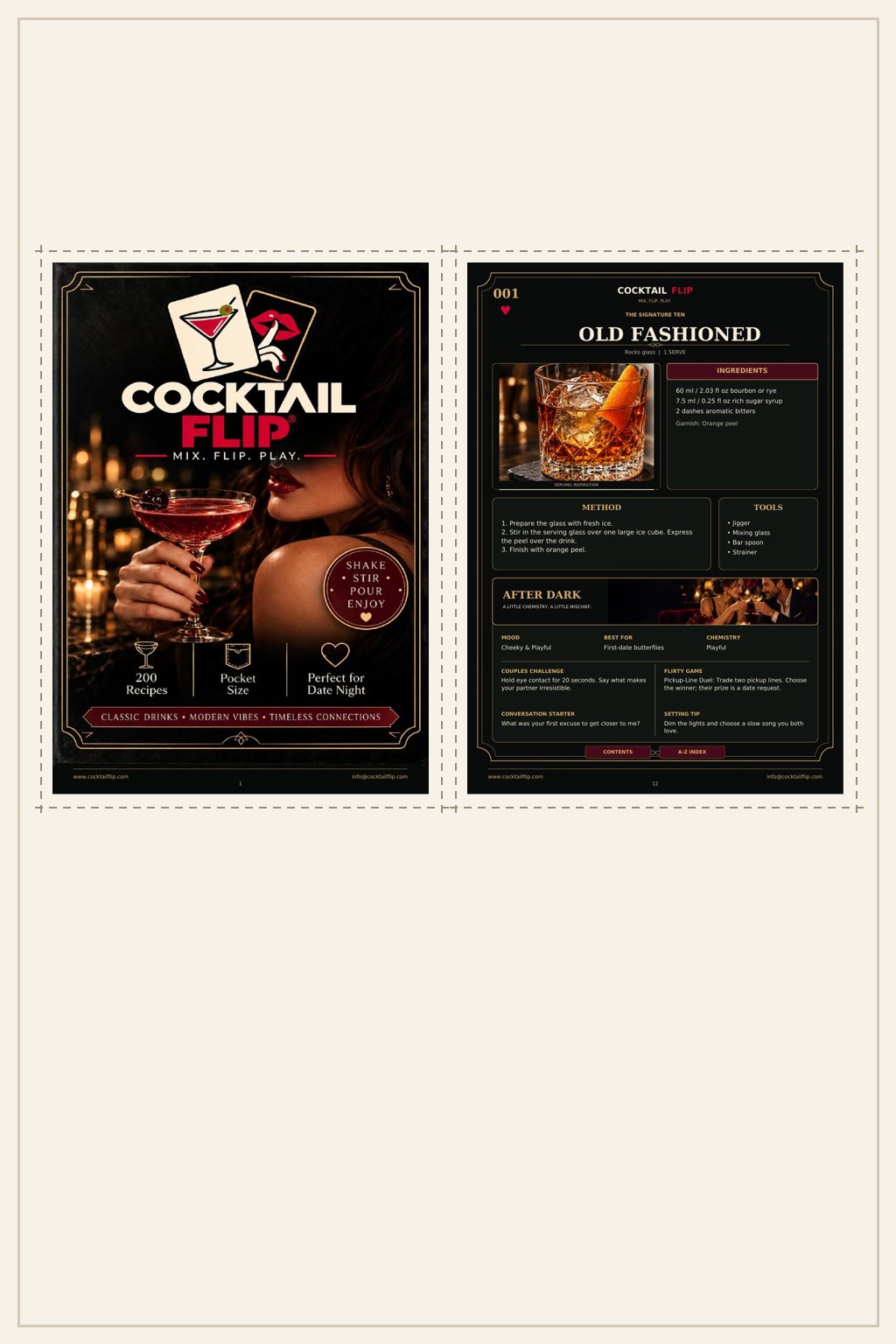
The Cocktail Flip digital edition: an interactive web deck, a print-at-home deck and a 213-page guidebook.
For adults 21+ in the US (or the legal drinking age where you live). Cards only — no alcohol is sold or shipped. Drink responsibly, never drink and drive. The games can be enjoyed without alcohol.