
Cocktails
Negroni Recipe for Two: Equal Parts, Easy Date Night
Negroni recipe quantities below make two cocktails, so you can share the mixing and settle into a date night at home.
By the Cocktail Flip team · · 6 min read
Quick answer
Stir 2 oz (60 ml) each of gin, Campari and sweet vermouth with ice, then divide into two glasses. Equal parts make the ratio easy to remember; this is a bitter, spirit-forward drink to sip slowly. Choose the zero-proof variation if you are avoiding alcohol.
In this article
- Negroni recipe ingredients for two
- Method
- Ratio and technique
- Zero-proof version for two
- Pair it with a card and a conversation
- Negroni history and the role of each ingredient
- Five related Negroni variations for two
- Glass, ice and dilution: avoiding a harsh Negroni
- A small batch for two without guesswork
- Related reading
- Make your next date night easy
Negroni recipe quantities below make two cocktails, so you can share the mixing and settle into a date night at home. These ideas are for US adults 21+. Never drink and drive; offer water, snacks and alcohol-free drinks.
Negroni recipe ingredients for two
- 12 oz (60 ml) gin
- 22 oz (60 ml) Campari
- 32 oz (60 ml) sweet vermouth
- 4Ice
- 52 orange peels to garnish
Method
- 11. Add gin, Campari and sweet vermouth to a mixing glass.
- 22. Fill with ice and stir for 20–30 seconds until cold.
- 33. Divide evenly into two rocks glasses over fresh ice.
- 44. Twist one orange peel over each drink and add it as garnish.
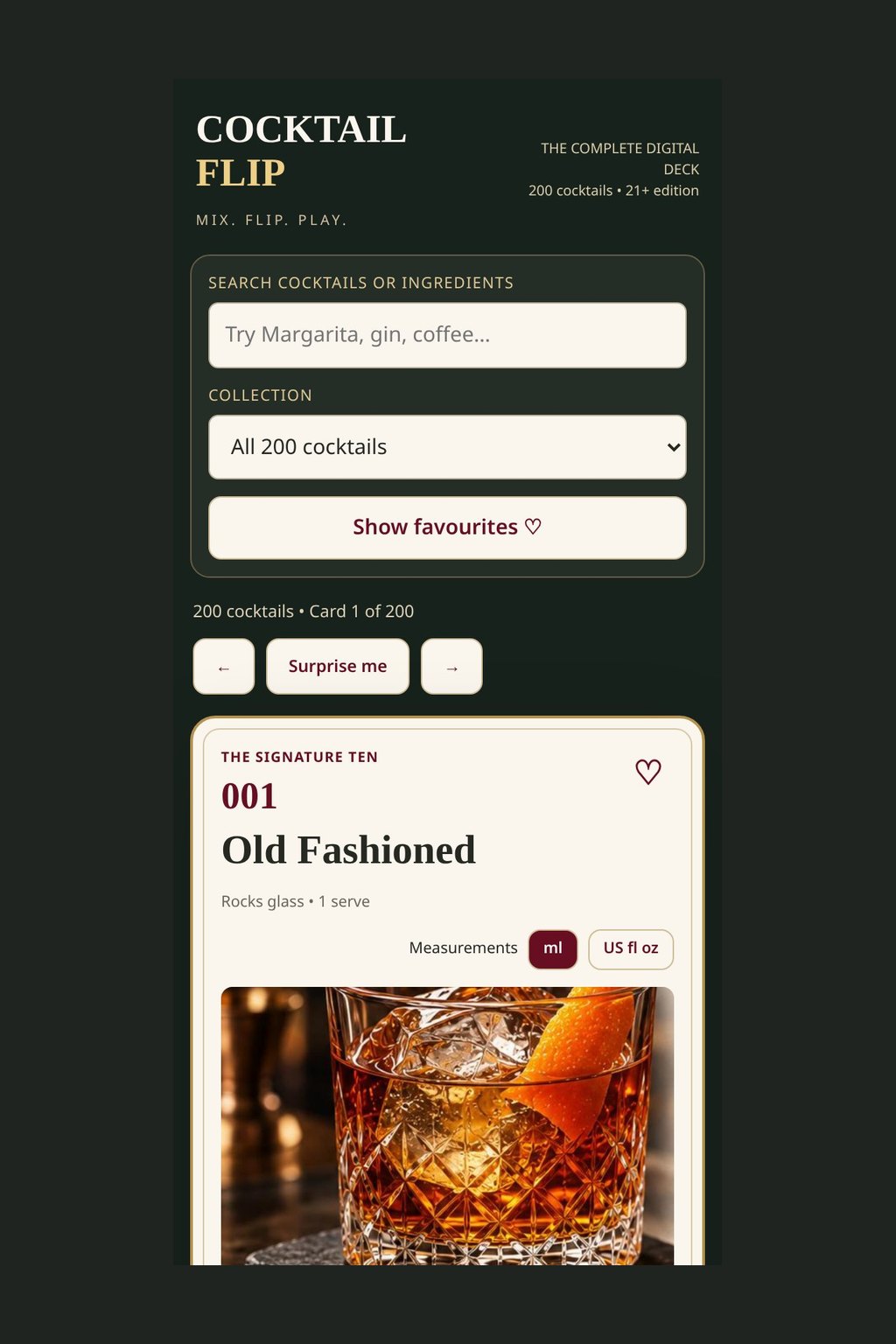
Get 200 cocktails with a game on each
Complete Digital Edition · $24.99 · See what's inside →
Ratio and technique
Stir 2 oz (60 ml) each of gin, Campari and sweet vermouth with ice, then divide into two glasses. Equal parts make the ratio easy to remember; this is a bitter, spirit-forward drink to sip slowly.
Zero-proof version for two
For two zero-proof drinks, stir 2 oz (60 ml) each of a labeled 0.0% botanical gin alternative, bitter aperitif alternative and vermouth alternative with ice, then divide over fresh ice. Check every label: not all alcohol-free alternatives are 0.0%. Flavor and sweetness vary, so adjust the ratio to taste.
Pair it with a card and a conversation
Choose a recipe-and-game card together, then alternate who measures and who reads the instructions. After mixing, try Same Page: each secretly writes an ideal dinner, destination and song for the other, then compare. One point per matching guess, and either person may pass. Keep playing with water after the drinks are finished.
Negroni history and the role of each ingredient
The commonly told origin story places the Negroni in Florence around 1919, when Count Camillo Negroni reportedly requested a stronger variation on an Americano by replacing soda with gin. The details are debated, so treat the story as cocktail tradition rather than a fully settled account. What is clear in the glass is the enduring combination of gin, bitter aperitif and sweet vermouth.
Gin contributes botanical aroma, Campari brings bitterness and sweet vermouth supplies wine-based richness and spice. Equal parts are a reliable introduction, but brands change the balance. Start with a familiar dry gin rather than a strongly flavored specialty bottle. Sweet vermouth is not the same as dry vermouth; swapping them changes the drink substantially, even when the measurements stay equal.
Five related Negroni variations for two
Boulevardier: replace the base recipe's 2 oz (60 ml) gin with 2 oz (60 ml) bourbon or rye, keeping 2 oz (60 ml) each Campari and sweet vermouth. Stir with ice and divide over fresh ice. The whiskey makes a warmer, rounder relative of the classic. For zero-proof, choose labeled 0.0% alternatives for all three components and taste before assuming they match the originals.
White Negroni: stir 2 oz (60 ml) gin, 2 oz (60 ml) Suze and 2 oz (60 ml) Lillet Blanc with ice, then divide between two rocks glasses. This is an equal-parts house interpretation of a related drink; bitterness differs from Campari. A lemon peel suits the flavor. For zero-proof, use suitable labeled 0.0% botanical, gentian-style bitter and white aperitif alternatives, adjusting for their sweetness.
Negroni Sbagliato: divide 2 oz (60 ml) Campari and 2 oz (60 ml) sweet vermouth between two ice-filled glasses, then top each with 1 oz (30 ml) chilled sparkling wine. Stir gently once. Replacing gin with sparkling wine changes both texture and strength; it does not make the drink alcohol-free. Use labeled 0.0% bitter and vermouth alternatives plus sparkling water for a zero-proof interpretation.
Americano: divide 2 oz (60 ml) Campari and 2 oz (60 ml) sweet vermouth between two ice-filled highballs, then top each with 2 oz (60 ml) club soda. Stir gently and add orange peel. This longer relative is useful when you want more mixer, though it still contains alcohol. For zero-proof, replace both aperitifs with labeled 0.0% alternatives and keep the soda.
Gin-forward house variation: stir 3 oz (90 ml) gin, 1½ oz (45 ml) Campari and 1½ oz (45 ml) sweet vermouth with ice for two servings. This changes the equal-parts balance rather than fixing a supposedly incorrect classic. Use the original ratio first so you can compare. For zero-proof, use the same proportions with labeled 0.0% alternatives and adjust only after tasting.
Glass, ice and dilution: avoiding a harsh Negroni
A large cube in a rocks glass makes a clean presentation, but ordinary fresh cubes are fine. What matters is chilling and diluting before serving. Stir the ingredients with plenty of ice, taste a small sample and strain onto fresh ice. Do not assume that a large serving cube can instantly chill warm ingredients without changing the drink as it melts.
Avoid shaking the classic: it adds aeration and ice shards when the goal is a clear, smooth stirred drink. If you do not have a mixing glass, use a clean sturdy jug with room for the spoon to move. Stir around the edge rather than aggressively chopping through the cubes. Express orange peel over the surface, then rub the outside rim lightly if you enjoy the aroma.
Flat or stale flavor may come from old vermouth rather than the ratio. Refrigerate opened vermouth, follow the bottle's guidance and mark the opening date. It is a wine-based ingredient, not something to store indefinitely beside spirits. If the bitterness simply is not enjoyable, choose the longer Americano or a different drink rather than forcing yourself to acquire the taste.
A small batch for two without guesswork
Measure the base recipe into a covered container and chill until ready. Because the recipe makes two servings, there is no need for a large party batch or an estimated free pour. Stir with ice at service to add the needed water, then divide evenly. If preparing an already diluted version, taste and record the water you add rather than assuming every freezer and ice cube behaves alike.
Serve with olives, salted nuts or another snack appropriate to your guests' dietary needs, and put water alongside. The Negroni is spirit-forward even though it tastes balanced; extending the conversation does not require extending the pour. Keep any zero-proof batch labeled separately, use clean measuring tools and check all substitute labels if total alcohol avoidance matters.
Related reading
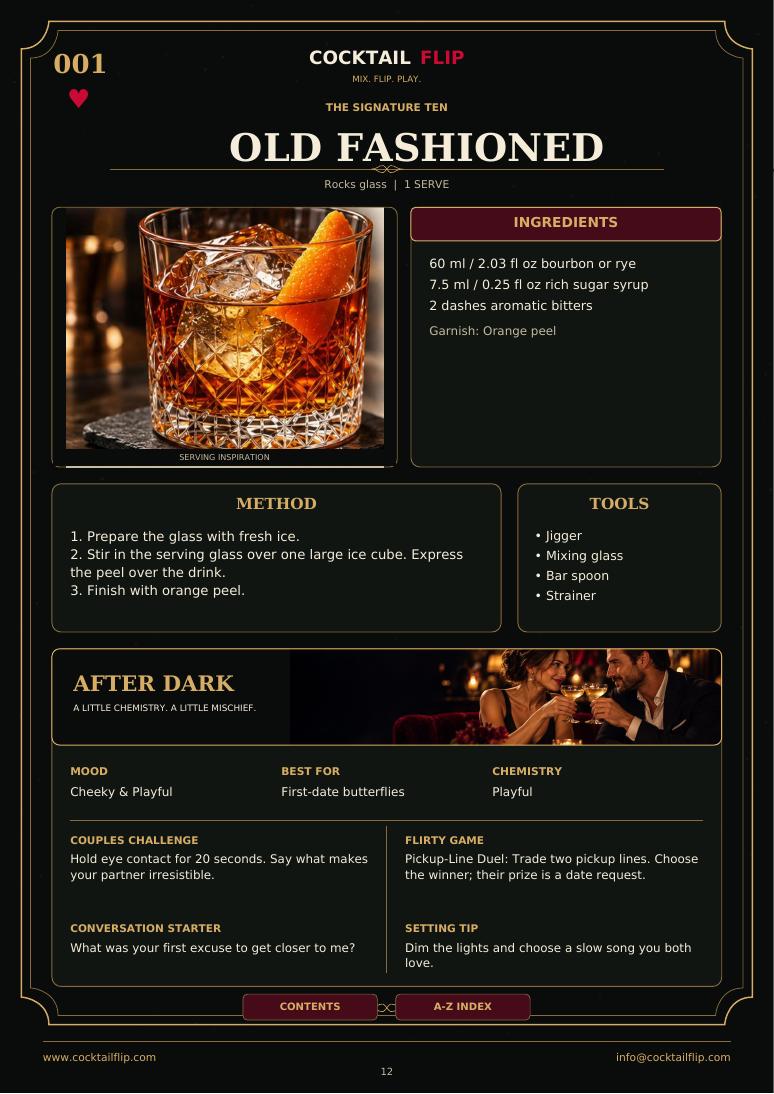
Explore easy gin cocktails, cocktail history and the Old Fashioned recipe.
Make your next date night easy
Explore our cocktail recipe cards and the shop. The printable Cocktail Flip Complete Digital Edition is available now. The physical box is coming soon: 200 double-sided cards, with a recipe on the front and a game on the back.
Frequently asked questions
Is a Negroni supposed to taste bitter?
Yes. Campari contributes a deliberately bitter flavor. Try a longer Americano variation if you prefer more mixer, or choose another drink rather than adding unmeasured sugar.
Can I make a Negroni without Campari?
You can make a variation with another bitter aperitif, but sweetness and bitterness will change. Start with a small test and do not assume every red aperitif is interchangeable.
What is the difference between a Negroni and a Boulevardier?
A Negroni uses gin; a Boulevardier uses whiskey with bitter aperitif and sweet vermouth. The variation above keeps equal parts for an easy two-serving comparison.
What is the classic Negroni ratio?
Equal parts gin, Campari and sweet vermouth. This two-serving recipe uses 2 oz (60 ml) of each.
Do you shake or stir a Negroni?
Stir with ice to chill and dilute without adding the aeration of shaking.
How should I store vermouth?
Refrigerate after opening and follow the bottle’s storage guidance; buy a size you can use while fresh.
Not ready to buy?
Get a free sample card by email
A real recipe and game to try tonight. Free, no payment.
200 cocktails. A game on every one.
The Cocktail Flip digital edition: an interactive web deck, a print-at-home deck and a 213-page guidebook.
For adults 21+ in the US (or the legal drinking age where you live). Cards only — no alcohol is sold or shipped. Drink responsibly, never drink and drive. The games can be enjoyed without alcohol.