Cocktails
Whiskey Sour Recipe for Two: A Date-Night Classic
Whiskey sour recipe quantities below make two cocktails, so you can share the mixing and settle into a date night at home.
By the Cocktail Flip team · · 5 min read
Quick answer
Shake 4 oz (120 ml) whiskey, 1½ oz (45 ml) lemon juice and 1 oz (30 ml) simple syrup with ice, then divide between two glasses. This version skips egg white, so there is no raw egg to handle. Choose the zero-proof variation if you are avoiding alcohol.
In this article
- Whiskey sour recipe ingredients for two
- Method
- Ratio and technique
- Zero-proof version for two
- Pair it with a card and a conversation
- Where the whiskey sour fits in cocktail history
- Five whiskey sour variations for two
- Fix common sour mistakes before changing the recipe
- Related reading
- Make your next date night easy
Whiskey sour recipe quantities below make two cocktails, so you can share the mixing and settle into a date night at home. These ideas are for US adults 21+. Never drink and drive; offer water, snacks and alcohol-free drinks.
Whiskey sour recipe ingredients for two
- 14 oz (120 ml) bourbon or rye whiskey
- 21½ oz (45 ml) fresh lemon juice
- 31 oz (30 ml) simple syrup
- 4Ice
- 52 lemon slices to garnish
Method
- 11. Add whiskey, lemon juice and simple syrup to a shaker.
- 22. Fill with ice and shake hard for 10–15 seconds.
- 33. Strain evenly into two rocks glasses filled with fresh ice.
- 44. Garnish each with a lemon slice.
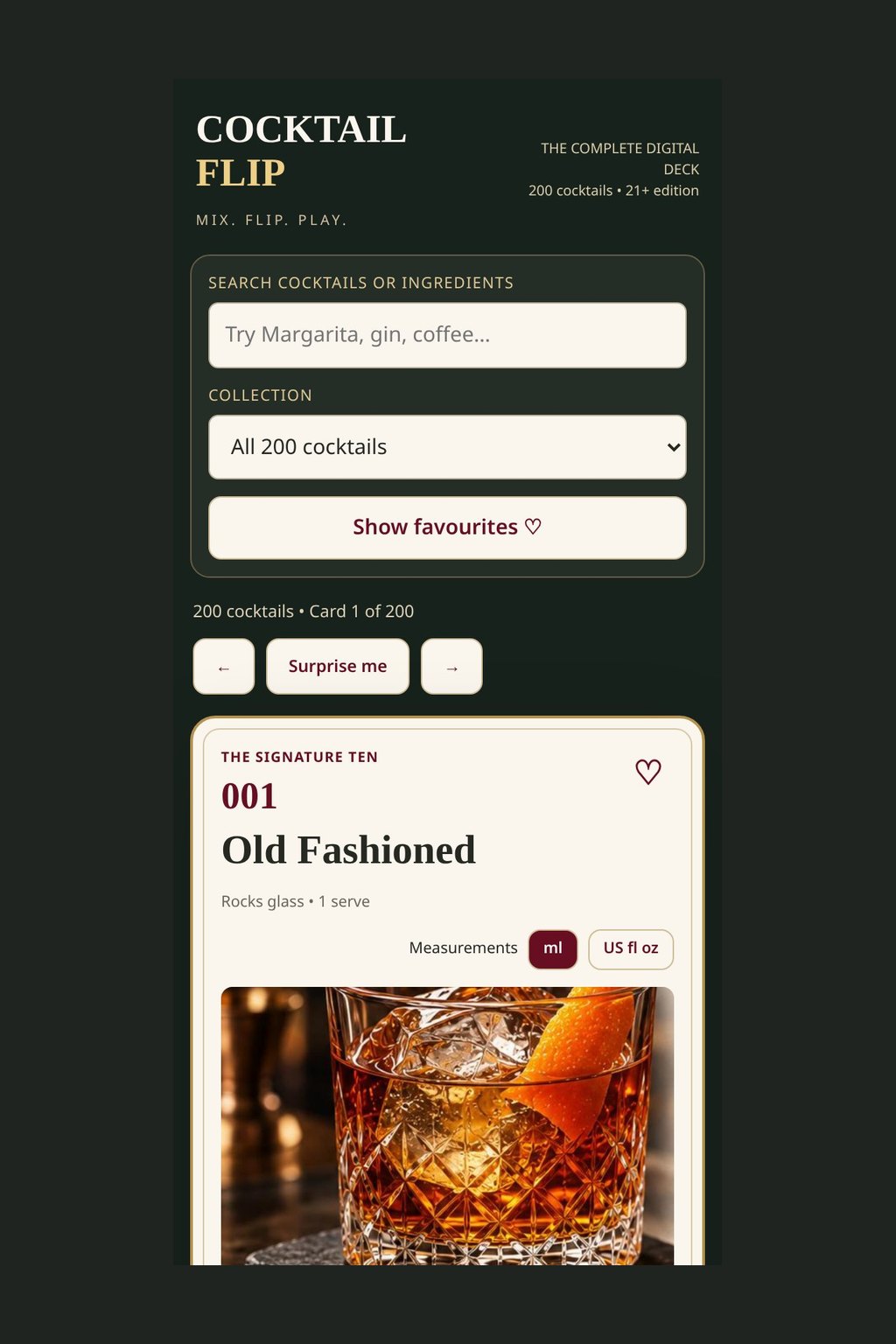
Get 200 cocktails with a game on each
Complete Digital Edition · $24.99 · See what's inside →
Ratio and technique
Shake 4 oz (120 ml) whiskey, 1½ oz (45 ml) lemon juice and 1 oz (30 ml) simple syrup with ice, then divide between two glasses. This version skips egg white, so there is no raw egg to handle.
Zero-proof version for two
For two zero-proof sours, replace the whiskey with 4 oz (120 ml) strong chilled black tea, keeping the lemon and syrup amounts the same. Shake with ice and strain into two glasses; the result is a tea sour, not an exact whiskey replica.
Pair it with a card and a conversation
Choose a recipe-and-game card together, then alternate who measures and who reads the instructions. After mixing, try Same Page: each secretly writes an ideal dinner, destination and song for the other, then compare. One point per matching guess, and either person may pass. Keep playing with water after the drinks are finished.
Where the whiskey sour fits in cocktail history
The whiskey sour belongs to the broader sour family: a base spirit balanced with citrus and sweetness. It appears in nineteenth-century cocktail literature, including Jerry Thomas's 1862 bartender's guide. Its lasting appeal is structural rather than mysterious: lemon brings acidity, syrup softens it and whiskey supplies aroma and body. Modern versions vary in sweetness and texture, so there is no need to treat one house ratio as a universal law.
Bourbon often brings vanilla and caramel notes, while rye can feel drier and more peppery. Those are useful starting descriptions, not guarantees for every bottle. Choose a whiskey you enjoy and keep the recipe constant for the first attempt. Changing the whiskey, syrup strength and citrus amount all at once makes it difficult to understand what improved the drink.
Five whiskey sour variations for two
Maple sour: replace the 1 oz (30 ml) simple syrup in the base recipe with ¾ oz (22.5 ml) maple syrup. Shake with the same whiskey and lemon quantities, then taste before adding more sweetness. For zero-proof, use the chilled black tea replacement from the main recipe. Maple varies in intensity, so this is a starting point rather than an exact sweetness match.
Honey sour: replace the simple syrup with 1 oz (30 ml) honey syrup made from equal volumes honey and warm water, then cooled. Shake as usual; do not add thick honey directly to an ice-filled shaker because it can cling to the bottom. The tea version works here too. Honey is not vegan, so choose the original simple syrup when that matters.
Ginger sour: replace the simple syrup with ¾ oz (22.5 ml) ginger syrup and shake with the base whiskey and lemon. Use tea instead of whiskey for zero-proof. Ginger syrups vary greatly in heat and sugar; start small and taste. This adds spice without requiring raw ginger pieces that may be unpleasant in the finished drink.
Orange-accented sour: use 1 oz (30 ml) lemon juice and ½ oz (15 ml) orange juice in place of the base lemon amount, keeping the other ingredients unchanged. Use tea for an alcohol-free variation. Orange is less tart than lemon, so this drink may need slightly less syrup. It is a softer citrus interpretation, not a reason to omit all the lemon.
Egg-white texture variation: for two servings, add 1 oz (30 ml) pasteurized egg white to the base mixture. Shake without ice first, then add ice and shake again before straining. Use pasteurized product according to its label and avoid it for anyone who should not consume it. Egg is an allergen; skipping it remains a complete option. For zero-proof, keep the tea base or simply leave the foam element out.
Fix common sour mistakes before changing the recipe
A sour that tastes harsh may need better dilution rather than more sugar. Fill the shaker generously with solid ice and shake until it feels cold; a few wet fragments can melt quickly without chilling effectively. Strain onto fresh ice instead of pouring the used shaker ice into the glass. For an up presentation, use a chilled coupe and serve promptly.
Fresh lemon juice usually tastes brighter than a long-opened bottle. Strain seeds and measure the juice instead of guessing from “half a lemon,” because fruit size varies. Simple syrup strength matters too: the base recipe assumes equal volumes sugar and water. If your syrup is richer, start with less. Label homemade syrup, refrigerate it and discard it if its condition is questionable.
For two drinks, combine the measured whiskey, lemon and syrup in a covered container and refrigerate shortly before serving. Shake the whole two-serving batch only if your shaker has enough headroom for ice and movement; otherwise split it into two equal batches. Pre-mixing is not the same as dilution, so still shake with ice. Divide evenly before garnishing and keep the tea version clearly separate.
Related reading
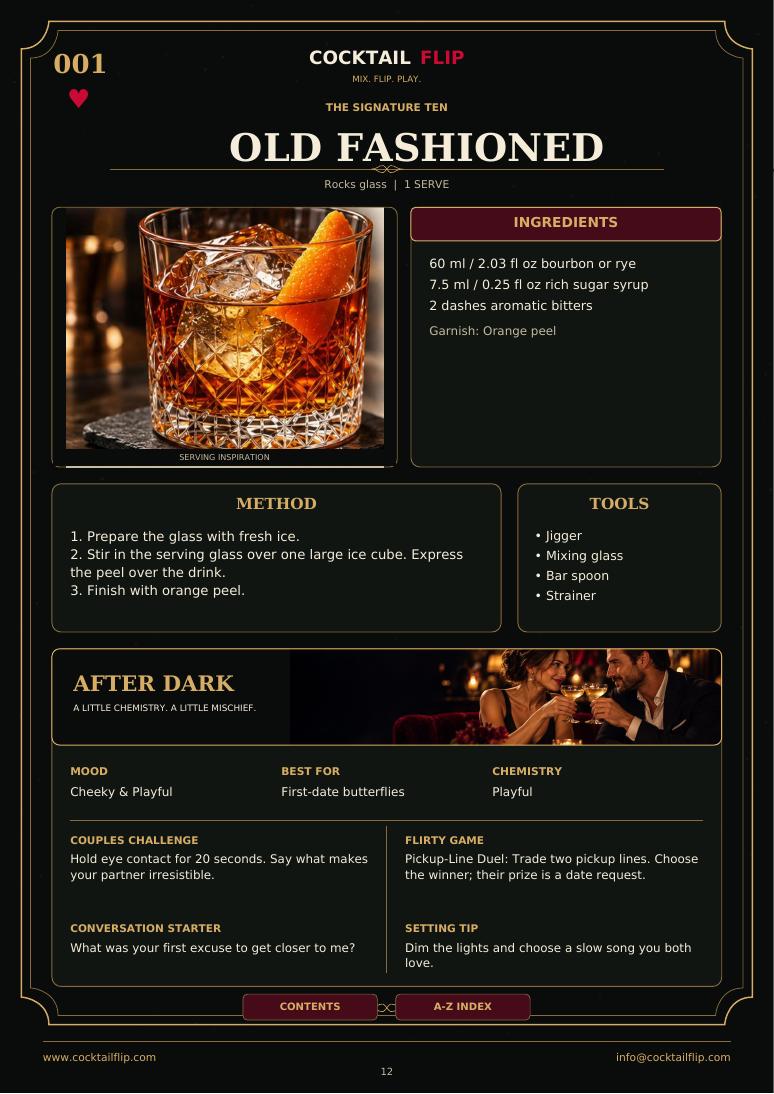
Compare with an Old Fashioned, a margarita or our bar tools guide.
Make your next date night easy
Explore our cocktail recipe cards and the shop. The printable Cocktail Flip Complete Digital Edition is available now. The physical box is coming soon: 200 double-sided cards, with a recipe on the front and a game on the back.
Frequently asked questions
Why does my whiskey sour taste too sour?
Check the lemon measurement and syrup strength first. Taste a small adjustment with a little more syrup, but also check chilling and dilution rather than adding sweetness automatically.
What glass is best for a whiskey sour?
Use a rocks glass over fresh ice or a chilled coupe without ice. Either is appropriate; choose a glass that comfortably fits the measured serving.
Can I use bottled lemon juice in a whiskey sour?
You can, but flavor varies. Freshly squeezed juice is a useful baseline; if using bottled juice, check its ingredients and taste before adjusting sweetness.
Do I need egg white for a whiskey sour?
No. This recipe leaves it out; egg white adds texture but is not required for a balanced sour.
Bourbon or rye for a whiskey sour?
Bourbon tends to be rounder and sweeter; rye brings a spicier profile. Choose what you both enjoy.
Can I make whiskey sours ahead?
Mix the still ingredients shortly ahead and refrigerate, then shake with ice just before serving.
Not ready to buy?
Get a free sample card by email
A real recipe and game to try tonight. Free, no payment.
200 cocktails. A game on every one.
The Cocktail Flip digital edition: an interactive web deck, a print-at-home deck and a 213-page guidebook.
For adults 21+ in the US (or the legal drinking age where you live). Cards only — no alcohol is sold or shipped. Drink responsibly, never drink and drive. The games can be enjoyed without alcohol.